Discipline 01 — Engineering Simulation

Engineering Simulation

DINETT verifies before anything is built. From the structural durability of mechanical equipment to the light, wind, sound, heat and safety of large buildings and urban environments, we reproduce physical phenomena numerically and quantitatively compare the outcomes of design alternatives.

  • Structural · Vibration · Impact Analysis
  • Thermal · Flow · Fluid · Acoustic Analysis
  • Building Environment Engineering
  • Precise verification with ANSYS
Overview

Analysis is not just calculation —
it is a tool for decisions

Many projects stop at the question “Is it safe?” DINETT goes a step further and answers how much margin there is, where it can be reduced, and what changes if the design changes. The purpose of analysis is not a pass/fail verdict, but to help designers make better choices.

DINETT’s analysis scope spans both industrial equipment and the built and urban environment. The same flow analysis techniques apply to cooling electronic components and to wind corridors around high-rise towers. This breadth is a strength in complex, cross-disciplinary challenges.

Every analysis goes through three stages: review of assumptions → convergence check → validation against measurements or literature. We report not just the result plots, but the reasons those results can be trusted.

0analysis services delivered by a single organization
0+analysis solutions and validation databases
V&VVerification and Validation procedures applied as mandatory
CLUSTER A

Structural · Vibration · Impact Analysis

01 — 06

Anything that carries load is in scope. From static loads to extreme conditions such as earthquakes and collisions, we determine the limits structures and machinery can withstand and how they behave at those limits.

01

Structural AnalysisStructural Analysis

Static and dynamic, linear and nonlinear structural analysis, together with stress distribution and buckling analysis, precisely verifies structural stability and deformation. We calculate not only code compliance but also the safety margin of each member.

Static · Nonlinear · Stress diagnosis · Buckling

02

Vibration Analysis & DiagnosticsVibration Analysis & Diagnostics

We analyze natural frequencies and resonance, evaluate transient vibration, and design noise and vibration mitigation for mechanical and building systems. Specialist analysis is provided across the seven sub-fields below, depending on the subject.

7 specialist fields
  • Ultra-precision vibration
  • Building structure vibration
  • Machinery vibration
  • Noise · acoustic vibration
  • Piping vibration
  • Pulsation
  • Community vibration limits

Natural frequency · Resonance · Transient vibration · Isolation design

03

Earthquake · Seismic AnalysisSeismic Analysis

Seismic response spectrum analysis and dynamic time-history analysis evaluate statutory seismic performance and support the design of seismic isolation and damping devices.

Response spectrum · Time history · Isolation · Damping

04

Collision · Impact · Blast AnalysisImpact & Blast Analysis

We simulate high-speed impacts and drop tests and perform extreme-state nonlinear dynamic analysis of blast-resistant structures and explosion loads.

High-speed dynamics · Drop testing · Blast-resistant structures

05

Fatigue AnalysisFatigue Analysis

Fatigue life prediction under cyclic loading and crack growth analysis determine product durability and appropriate replacement intervals.

Durability · Fatigue life · Crack growth

06

Dynamics AnalysisMultibody Dynamics

We analyze the behavior of mechanical mechanisms using multibody dynamics (MBD) and evaluate the mechanical loads on joints and the driving forces.

MBD · Mechanisms · Drive force calculation

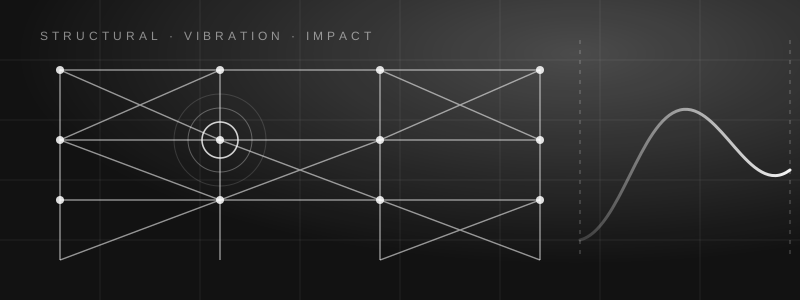
Analysis image showing the finite element mesh, vibration modes and stress concentrations of a structural frame
CLUSTER B

Thermal · Flow · Fluid · Acoustic Analysis

07 — 12

We make invisible flows visible. By calculating how air, heat and sound move through space, we design for comfort, efficiency and safety at the same time.

07

Flow Analysis (CFD)Fluid Dynamics

We provide solutions for internal and external fluid flow, turbulence modeling, pressure loss calculation and fluid–structure interaction (FSI) analysis.

CFD · Turbulence · Pressure loss · FSI

08

Thermal Analysis · Heat TransferThermal Analysis

We analyze combined conduction, convection and radiation heat transfer, optimize cooling systems for electronic components, and evaluate thermal stress.

Heat dissipation · Conduction · Convection · Radiation · Thermal stress

09

Wind Tunnel AnalysisVirtual Wind Tunnel

Using a virtual wind tunnel, we verify building-induced wind, wind loads on bridges, and the aerodynamic drag and lift of vehicles and aircraft.

Building wind · Aerodynamics · Drag · Lift

10

Airflow · HVAC AnalysisHVAC & Airflow

We analyze airflow distribution, ventilation efficiency, thermal comfort (PMV) and smoke control system performance in cleanrooms and large indoor spaces.

Cleanroom · Airflow distribution · PMV · Smoke control

11

Polymer · Composite AnalysisPolymer & Composites

We model the viscoelasticity of rubber and plastics, analyze injection molding behavior, and assess the strength of laminated composites such as carbon fiber (CFRP).

Injection molding · CFRP · Viscoelasticity

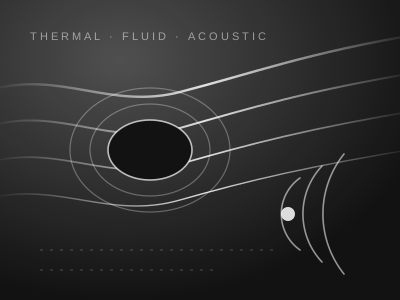
Analysis image showing streamlines, thermal contours and sound wave propagation for thermal, flow and acoustic analysis
12

Acoustic Analysis · Acoustic Design · Soundproofing WorksAcoustic Analysis, Design & Construction

A one-stop service from indoor noise propagation simulation to soundproofing design, sound absorption and insulation materials installation, and specialist acoustic construction. We don’t stop at analysis — the same team is responsible for verifying performance after construction.

9 specialist fields
  • Architectural acoustics design · analysis
  • Soundproofing design · works (absorbers · soundproofing · insulation)
  • Acoustic doors
  • Soundproof observation windows
  • Noise barriers
  • Acoustic test rooms (anechoic · reverberation)
  • Industrial noise control
  • Silencers
  • Noise/vibration · architectural acoustics interior works

Reverberation time · Sound field analysis · Absorption · Insulation · Construction

CLUSTER C

Building Environment Engineering

13 — 23

Buildings affect their surroundings and are affected by them. By quantitatively predicting the interplay of light, wind, sound and heat, we help projects pass permitting reviews and prevent defects and complaints after completion.

13

Light Pollution · Glare AnalysisLight Pollution & Glare

We assess glare affecting nearby residents and drivers caused by light reflected from building facades, and provide 3D light pollution simulations for permitting.

Reflected light · Glare · Permitting support

14

Noise Prediction, Assessment · MeasurementNoise Prediction, Assessment & Measurement

We predict the propagation of road, rail and HVAC noise, carry out noise measurements for environmental impact assessments, and develop noise control measures to meet legal limits. Linking prediction, assessment and measurement in one workflow, we verify the actual effect of the measures.

6 specialist fields
  • Noise analysis
  • Noise assessment
  • HVAC noise
  • Noise analysis procedure · benefits
  • Noise measurement
  • Community noise · vibration limits

Propagation prediction · Regulatory limits · Mitigation · Post-verification

15

Sunlight Access AnalysisDaylight Rights

We analyze how far new apartments and buildings infringe on sunlight access in nearby residential areas and review the statutory limits.

Sunlight hours · Height setback limits · Legal review

16

View Rights AnalysisView Rights

Using 3D virtual modeling, we measure view openness and obstruction ratios and evaluate measures for view rights disputes.

3D view check · View obstruction ratio

17

Wind Corridor · Airflow AnalysisWind Corridor & Airflow

We analyze air circulation, wind corridor preservation and pollutant dispersion according to urban site layout, and advise on environmentally friendly layout design.

Urban wind corridors · Air circulation · Dispersion

18

Wind Environment Analysis · Wind Tunnel TestingWind Environment & Tunnel Test

We assess strong winds around high-rise buildings (building wind), verify pedestrian wind comfort, and validate results with scale-model wind tunnel testing.

Building wind · Pedestrian wind comfort · Validation

19

Daylighting Performance AnalysisDaylighting Performance

We calculate indoor daylight illuminance distribution and Daylight Factor to meet green building certification criteria.

Daylighting · Daylight Factor · Illuminance distribution

20

Solar Shading AnalysisSolar Shading

We evaluate seasonal solar heat gain and analyze the performance of external shading devices (louvers, roofs) and the resulting heating and cooling energy savings.

Shading louvers · Solar gain · Energy savings

21

Heat Island · Thermal Environment AnalysisUrban Heat Island

We simulate urban heat island effects and outdoor thermal comfort (UTCI/PET) with green roofs and permeable paving.

Heat island · Outdoor thermal comfort · UTCI

22

Fire · Evacuation AnalysisFire & Evacuation

We simulate smoke spread and temperature distribution in a fire using FDS, and assess safety by comparing occupants’ required safe egress time (RSET) with the available safe egress time (ASET).

FDS · Smoke spread · RSET vs ASET

23

Stack Effect AnalysisStack Effect

We simulate elevator door malfunctions, air infiltration and pressure-difference mitigation measures caused by the stack effect in high-rise buildings.

High-rise stack effect · Pressure reduction · Door malfunction
Core Technology

ANSYS
Analysis Solutions

Built on ANSYS, the global standard CAE solution, we provide specialist engineering services across structural, fluid and thermal domains. Our analysis environment meets both Korean codes (KDS, etc.) and global standards.

  • Full use of structural, nonlinear and dynamic analysis modules
  • Integrated flow (CFD), heat transfer and coupled (FSI) analysis environment
  • Data integration with dedicated building environment analysis tools
  • Reproduction of results in clients’ own solver environments
  • Analysis automation scripts and in-house standard templates
Track Record

Case Studies &
Project Portfolio

We have carried out engineering and building simulations for major companies and public agencies in Korea and abroad. Under confidentiality agreements with clients, individual project names are not disclosed; instead, we describe them by project type and approach.

Project type Services deployed
Supertall Mixed-Use DevelopmentsWind environment · Stack effect · Fire evacuation · Structural
Large-Scale Residential ComplexesSunlight · View · Wind corridor · Noise prediction
Industrial Plant EquipmentPiping vibration · Pulsation · Thermal · Soundproofing works
Precision manufacturing · SemiconductorsUltra-precision vibration · Cleanroom airflow · Heat dissipation
Performance · Cultural venuesArchitectural acoustics design · Acoustic test room construction
Transportation infrastructureWind tunnel analysis · Traffic noise · Noise barrier design
How We Deliver

Our Process

Each of the 23 services follows the same six steps. The output of each step is the input to the next, and clients can review results and adjust direction at every stage.

We first confirm the analysis objectives, acceptance criteria, and permitting and review schedules. Only once “what needs to be proven” is clear can the type and precision of the required analysis be determined.
  • Checkpoints: applicable codes and standards, submission authority, deadlines, previous review history
  • Deliverables: scope definition, analysis plan and quotation
We convert drawings and 3D data into analysis models and define the mesh, material properties, loads and boundary conditions. Simplifications and their rationale are documented.
  • Checkpoints: extent of geometry simplification, sources of material properties, load combinations
  • Deliverables: analysis model, statement of assumptions and simplifications
We run the analysis and check how results change with mesh density to secure a numerically stable solution. Where convergence fails, we identify the cause and rerun.
  • Checkpoints: mesh sensitivity, time step, nonlinear convergence history
  • Deliverables: convergence review, preliminary analysis results
We confirm model validity against theoretical solutions, published cases, or DINETT’s own measurement and test results. Where needed, field measurements or wind tunnel tests are carried out in parallel to calibrate the model.
  • Checkpoints: error versus measurements, physical plausibility of calibration parameters
  • Deliverables: V&V report, calibrated model
Rather than stopping at a compliance verdict, we quantitatively compare and present improvement alternatives that weigh performance, cost and constructability together.
  • Checkpoints: performance margin per alternative, material and process changes, risks
  • Deliverables: comparison of alternatives, recommended option and rationale
We issue reports in the format required by the submission authority, and the responsible engineer stays with you through review and Q&A. Requests for supplements are handled at no extra cost.
  • Checkpoints: submission format, review schedule, anticipated questions
  • Deliverables: final report, summary presentation, review response record
Deliverables

What You Receive

  • Analysis report — technical document stating all assumptions, conditions, results, verdicts and limitations
  • Quantitative comparison table — performance, margin and impact summarized by design alternative
  • Validation documents (V&V) — evidence of convergence and correlation with measurements
  • Visuals — stress, flow, sound field and shadow distribution maps, animations
  • Review support materials — reports in submission format and notes on anticipated questions
  • Construction documents — detail drawings and quantities for work including soundproofing or acoustic construction
  • Source data — transfer of analysis models and scripts by agreement (supporting in-house capability building)
Sectors We Serve

Industries

IndustryTypical work
Construction · ArchitectureStructural safety, sunlight and view reviews, wind environment, architectural acoustics, smoke control
Urban · Site developmentWind corridors, heat island, light pollution, noise prediction and mitigation
Plant · EnergyPiping vibration and pulsation, pressure vessels, heat exchange performance, explosion-proof review
Machinery · Equipment manufacturingFrame strength, fatigue life, multibody dynamics, vibration isolation design
Mobility · TransportationCrash and drop, aerodynamics, NVH, lightweight optimization
Electronics · SemiconductorsThermal design, cleanroom airflow, ultra-precision vibration control for precision equipment
Public infrastructureSeismic performance evaluation, bridge wind loads, underground ventilation and evacuation
Cultural · Performance venuesArchitectural acoustics design, reverberation optimization, acoustic test room construction

Work requiring field measurement or wind tunnel testing is supported by our in-house Testing · Inspection · Measurement team, and work requiring structural judgment or a P.E. seal by our Structural Engineering team — with no separate contract.

Just tell us your analysis objective —
we’ll propose the scope and schedule first.

You don’t need to decide which of the 23 services you need. With just the questions you want answered and your submission deadline, our engineer will design the optimal review plan.