Discipline 05 — Environmental Engineering

Environmental Engineering

Passing a legally required procedure is not the same as solving the actual problem. DINETT performs statutory impact assessments, noise and vibration mitigation, and performance-based fire design, delivering measures that stay effective after completion — not just compliant on paper.

  • Statutory Impact Assessment · Consultation
  • Noise · Vibration Assessment & Mitigation Works
  • Performance-Based Fire Design
  • Prediction → Design → Construction → Post-Verification
Overview

Not just approval —
we look past completion

Environmental work doesn’t end when consultation is complete. Once the project begins, post-project environmental monitoring and real public complaints await. Measures that only meet the minimum consultation conditions will inevitably cost more after completion.

From the assessment stage, DINETT verifies the real effectiveness of mitigation measures through simulation. We show in numbers how many decibels a receptor gains when a noise barrier is raised by 1 meter, and whether that cost is justified. And because we build the soundproofing and vibration-isolation works ourselves, design and construction responsibility is never split.

Performance-based fire design follows the same view. Going beyond code compliance, we calculate how smoke actually spreads in a fire and how many minutes occupants need to evacuate, proving evacuation safety quantitatively.

0Environmental and fire safety services from a single organization
RSET vs ASETSafety judged by comparing required and available evacuation time
Design → ConstructionNoise and vibration control delivered from design through construction and post-measurement
CLUSTER A

Statutory Impact Assessment · Consultation

01 — 07

We select the assessment type that fits the project’s scale and nature, and build the documentation around the issues consulting agencies actually examine. The choice of procedure drives the entire permitting schedule.

01

Environmental Impact AssessmentEnvironmental Impact Assessment

We predict impacts on air, water, soil, noise, ecology and other items, and develop mitigation measures. Assessments fall into three types by project stage and scale, and the work begins with determining which type applies. We support you continuously through agency inquiries, implementation plans for consultation conditions, and post-project environmental monitoring.

3 assessment types
  • Strategic EIA — site feasibility and alternatives at the upper-level planning stage
  • EIA — impact prediction and mitigation by item
  • Small-scale EIA — simplified procedure for projects meeting size thresholds

Consultation response · Condition compliance · Post-monitoring

02

Educational Environment AssessmentEducational Environment Assessment

For developments near schools, we review sunlight, noise, vibration, air quality and safety impacts within educational environment protection zones and handle consultation with the education office.

1 sub-service
  • Educational facility safety assessment

Educational environment protection zones · Education office consultation

03

Traffic Impact AssessmentTraffic Impact Assessment

We forecast changes in surrounding traffic volume caused by the project and develop access plans and traffic flow improvement measures.

2 sub-services
  • Traffic Review
  • Traffic Flow Measures

Traffic forecasting · Access planning · Flow measures

04

Landscape Impact ReviewLandscape Impact Review

We assess impacts on skylines and view corridors with 3D landscape simulation, and prepare day and night landscape plans for review board approval.

3 sub-services
  • Landscape review
  • Landscape simulation
  • Nighttime landscape plan · Nighttime landscape review

Skyline · View corridors · Night landscape

05

Pre-Disaster Impact ReviewDisaster Impact Review

We review increased disaster risks from development, such as flooding, inundation and landslides, and design measures to offset increased stormwater runoff.

3 sub-services
  • Small-scale Disaster Impact Assessment
  • Disaster Impact Review
  • Stormwater Runoff Reduction Measures

Flood risk · Stormwater runoff · Detention facilities

06

Total Water Pollution Load ManagementTotal Water Pollution Load

We prepare reduction plans so the project can proceed within its allocated pollutant load, and support implementation assessment and monitoring.

1 sub-service
  • Water pollution planning · Implementation assessment · Monitoring

Pollutant load · Reduction plan · Implementation assessment

07

Low Impact Development (LID)Low Impact Development

We plan Low Impact Development techniques that restore natural water cycles — permeable pavement, vegetated swales, rain gardens — and support prior consultation.

1 sub-service
  • LID Prior Consultation

LID · Permeable paving · Rainwater cycle · Prior consultation
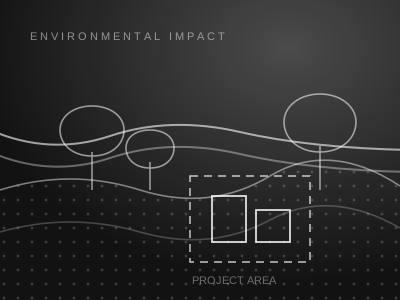
Environmental impact assessment image showing the project site, watershed and ecological survey area
CLUSTER B

Noise · Vibration Assessment & Mitigation

08 — 10

Prediction, measurement, design and construction are performed by one organization. The team that designs the measures measures their effect after construction, so responsibility is never divided and “it didn’t perform as expected” never happens.

08

Noise Impact Assessment · Prediction · MeasurementNoise Impact Assessment

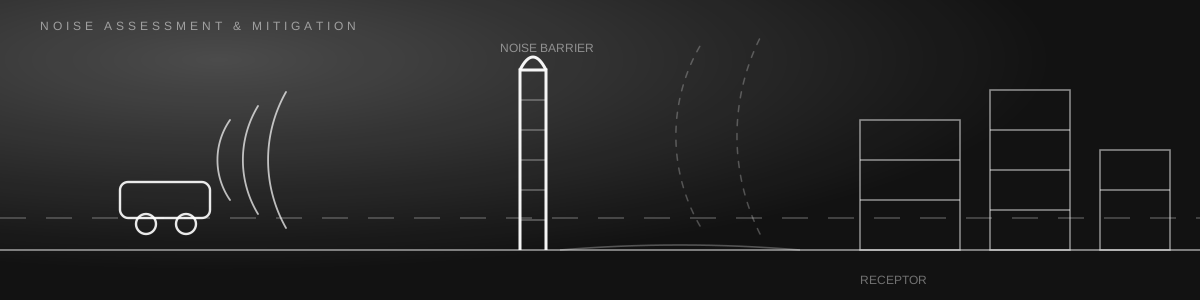
We predict noise propagation from roads, railways, construction sites and industrial facilities and assess compliance with regulatory standards. Calculating the impact at each receptor to pinpoint where limits are exceeded — and quantifying the reduction needed there — is the starting point of mitigation design.

6 detailed items
  • Noise analysis
  • Noise assessment
  • HVAC noise
  • Noise analysis procedure · benefits
  • Noise measurement
  • Community noise · vibration limits

Propagation prediction · Receptor impact · Regulatory standards

09

Soundproofing Design · ConstructionSoundproofing Design & Construction

We design soundproofing facilities based on prediction results and build them ourselves. Comparing alternatives, we show how high a noise barrier must be to reach the target reduction and whether the cost is justified. The goal is to prevent both over-design and under-design.

6 detailed items
  • Soundproofing design · works (absorbers · soundproofing · insulation)
  • Acoustic doors
  • Soundproof observation windows
  • Noise barriers
  • Industrial noise control
  • Silencers

Alternative comparison · Target reduction · Construction · Post-measurement

10

Architectural Acoustics · Test Chambers · InteriorsArchitectural Acoustics & Test Chambers

We simulate reverberation time and sound field distribution in concert halls, auditoriums and meeting rooms to secure acoustic performance at the design stage. We also build precision acoustic test chambers such as anechoic and reverberation rooms, and deliver interior works that account for noise and vibration.

3 sub-services
  • Architectural acoustic design · Analysis (simulation)
  • Acoustic test rooms (anechoic · reverberation)
  • Noise/vibration · architectural acoustics interior works

Reverberation time · Sound field analysis · Anechoic chamber · Construction

Noise mitigation image showing road noise propagation, noise barrier shielding and receptor impact
CLUSTER C

Fire Protection · Fire Safety

11 — 12

For large and special buildings where prescriptive codes are hard to apply, we take a performance-based approach that proves safety by calculating real fire scenarios.

11

Performance-Based Fire Design (PBD)Performance-Based Fire Design

We develop performance-based designs for buildings where standard codes are hard to apply — large spaces, atriums, complexes linked to underground facilities — and handle fire safety review. This includes verifying smoke control performance and comparing layouts of evacuation stairs and refuge areas.

1 sub-service
  • Fire Protection Design · Review

PBD · Fire review · Smoke control verification · Evacuation layout

12

Fire · Evacuation SimulationFire & Evacuation Simulation

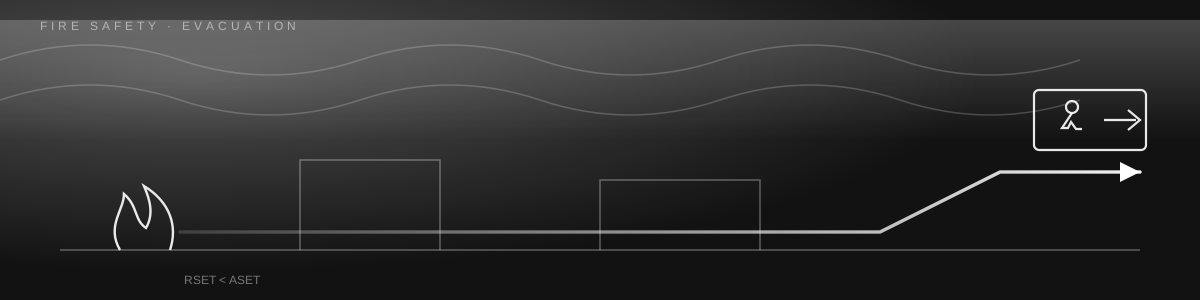
We use FDS to predict smoke spread, temperature distribution, visibility and toxic gas concentrations in a fire, and calculate the required safe egress time (RSET) based on occupant walking characteristics. Comparing it with the available safe egress time (ASET), we quantify the safety margin.

1 sub-service
  • Fire · Evacuation Simulation

FDS · Smoke spread · RSET vs ASET

Fire safety image showing smoke spread, evacuation routes and exit guidance in a fire
How We Deliver

Our Process

Half of environmental work is communication with consulting agencies. The same manager handles both technical review and administrative procedures.

Based on project scale, location and use, we confirm the applicable statutory assessments, consulting agencies and required timeline. When several assessments apply at once, we sequence them to reduce duplicate surveys.
  • Checkpoints: project area, zoning, adjacent schools and housing, rivers and water sources
  • Deliverables: procedure review, consultation schedule, consolidated quote
We conduct on-site noise and vibration measurements, survey nearby receptors, and gather weather, terrain and traffic data. Prediction accuracy is determined by the quality of background data.
  • Checkpoints: background noise level, key receptors, existing traffic, terrain conditions
  • Deliverables: baseline survey results, receptor layout, background measurement data
We quantitatively predict the impacts of the project. Noise propagation, smoke spread, evacuation behavior and stormwater runoff are calculated by scenario to pinpoint locations exceeding standards.
  • Checkpoints: construction / operation scenarios, worst-case conditions
  • Deliverables: impact prediction maps, list of exceedance locations
We apply proposed measures to the model and recalculate their effect. Comparing the cost and effect of several alternatives prevents both over-design and under-design.
  • Checkpoints: reduction by alternative, installation space constraints, maintenance burden
  • Deliverables: mitigation design, predicted reduction, cost comparison table
We respond to agency inquiries and submit supplementary materials. Once consultation conditions are finalized, we prepare an implementation plan and hand it over to the construction phase.
  • Checkpoints: feasibility of consultation conditions, responsible parties and timing
  • Deliverables: consultation completion documents, condition implementation plan
Where needed, we build soundproofing and vibration-isolation facilities ourselves and confirm actual performance against predictions through post-completion measurement. We also carry out post-project environmental monitoring on your behalf.
  • Checkpoints: measured vs. predicted deviation, any complaints
  • Deliverables: construction completion report, post-measurement certificate, post-monitoring report
Deliverables

What You Receive

  • EIA Report — prediction results and mitigation measures by item
  • Traffic · Landscape · Disaster Reviews — submissions formatted for each agency
  • Noise · Vibration Prediction Report — impact at each receptor and compliance judgment
  • Mitigation Design Documents — specifications, details, quantities and rough cost estimate
  • Performance-Based Design Report — fire and evacuation simulation and safety judgment
  • Consultation Record — inquiries, responses and condition implementation plan
  • Construction Completion Report — soundproofing and vibration-isolation works and inspection results
  • Post-Verification Certificate — post-completion measurements compared with predictions
Sectors We Serve

Applications

Facility typeTypical work
Housing Sites · Urban DevelopmentStrategic and full EIA, traffic and disaster impact, LID, post-monitoring
Roads · RailwaysTraffic noise prediction, noise barrier design and construction, vibration review
Industrial Complexes · FactoriesFacility noise, industrial soundproofing, water pollution load
Large Mixed-Use FacilitiesPerformance-based design, smoke control verification, evacuation safety assessment
Performance · Cultural venuesArchitectural acoustics design, reverberation optimization, acoustic test room construction
Developments Near SchoolsEducational environment assessment, construction noise and vibration measures, complaint response
Developments Near HousingLandscape review, noise reduction, stormwater runoff reduction

Noise prediction and fire/evacuation analysis are performed by the Engineering Simulation team, and field measurement and post-verification by the Testing & Measurement team. For projects with parallel building permit reviews, we manage items jointly with the Building Environment team to reduce duplicate surveys.

We’ll first confirm
which assessments you need.

Just tell us the project location, scale and planned schedule, and we’ll reply with the applicable statutory procedures and timeline.