Climate response is decided
early in design
Most of a building’s lifetime emissions are locked in at the design stage. The room to reverse them after completion through equipment replacement or operational improvements is narrower than you might think. We address both mitigation and adaptation — but only within the bounds of what can be proven by calculation.
Climate Insights
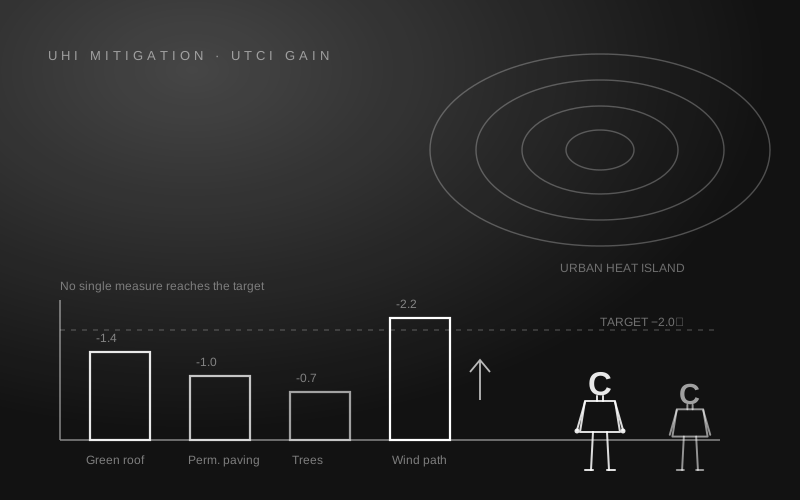
Urban Heat Islands: Are Green Roofs Enough?
Green roofs, permeable paving, street trees and wind corridors — we used simulation to compare the outdoor thermal comfort (UTCI) gains of four mitigation measures under identical conditions. The conclusion: no single measure is enough.
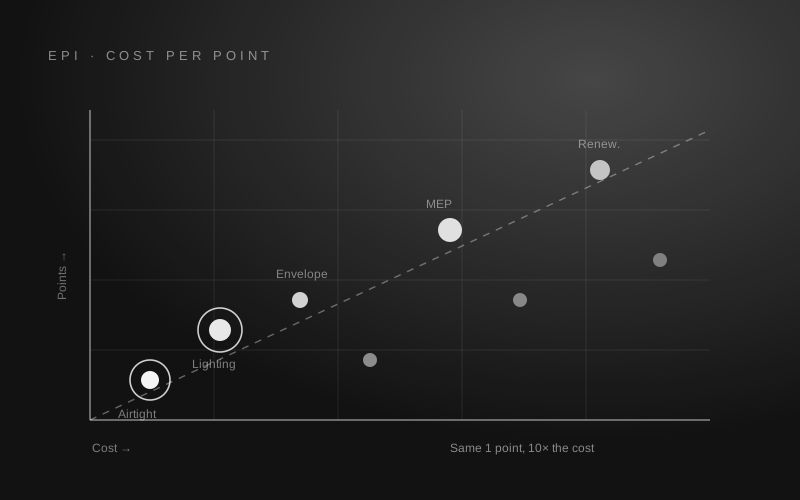
Energy Saving Plan EPI: There Is an Order to Raising Your Score
The cost of earning the same single point varies more than tenfold between items. A practical approach: rank items by cost-effectiveness, then work toward the target score.
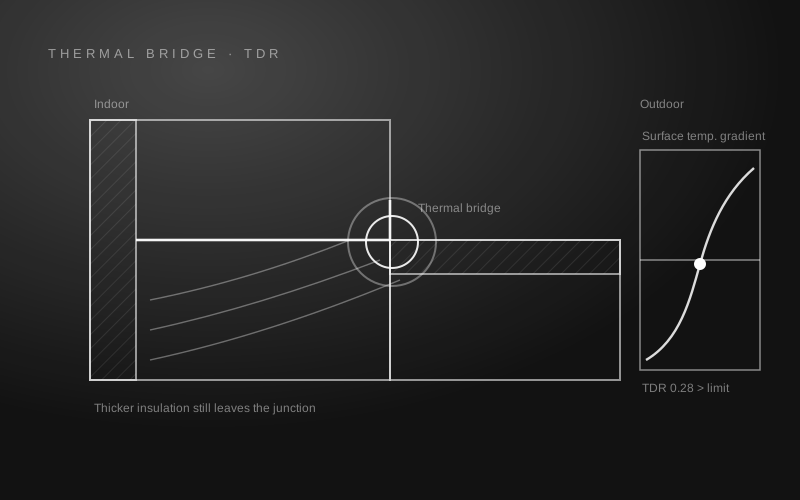
Condensation defects: why thicker insulation doesn’t solve them
How condensation forms, viewed through the temperature difference ratio (TDR) at thermal bridges — and how to tell when the problem is detailing rather than insulation performance.
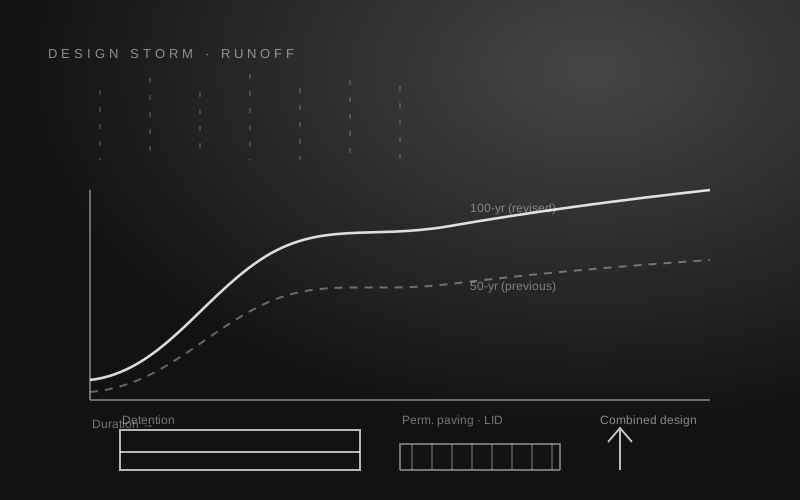
Stormwater Runoff Reduction in an Era of Extreme Rainfall: Time to Revisit Design Frequency
When design frequencies derived from historical rainfall statistics are no longer conservative, how should detention capacity and low impact development (LID) techniques be combined?
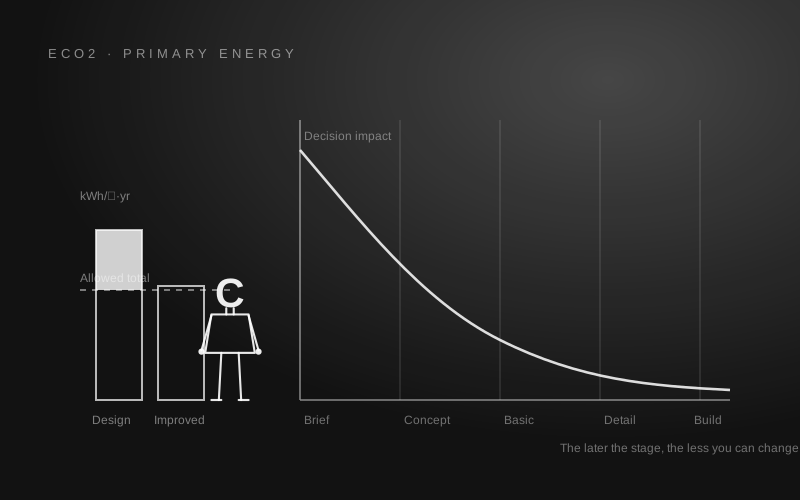
Building Energy Total Consumption Standard (ECO2): Where Projects Get Stuck Early in Design
Run ECO2 just before permitting and find you fall short, and you have almost no options left. Five variables to check early, at the schematic design stage.
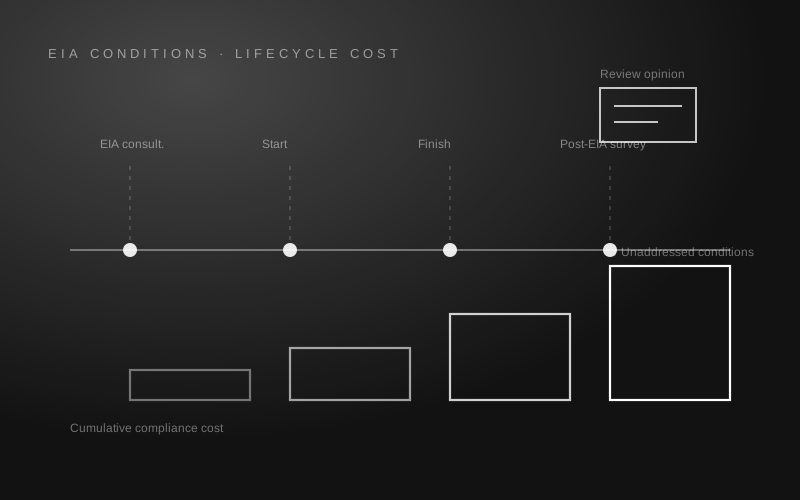
EIA Consultation Conditions That Come Back as Costs After Completion
Typical patterns in which minimal mitigation measures become problems in post-project environmental monitoring, and how to build in margin at the assessment stage.
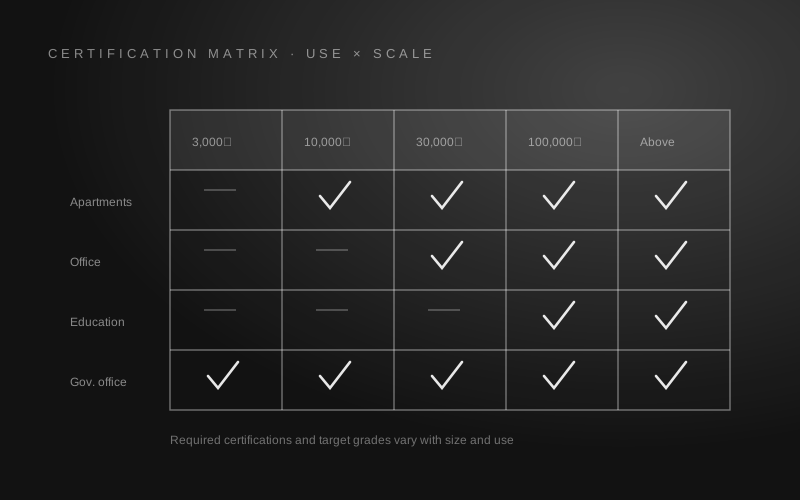
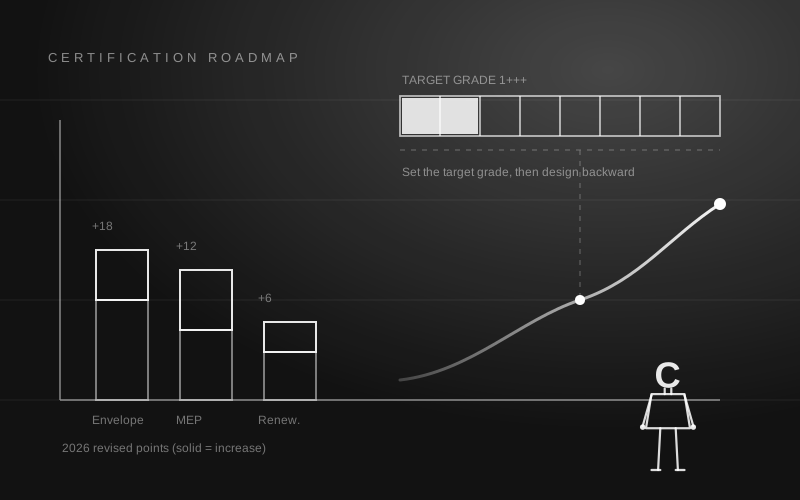
[Guide] Green Building Certification Roadmap — Applicability by Size and Use
A table showing mandatory and recommended certifications at a glance by gross floor area and use. PDF available.
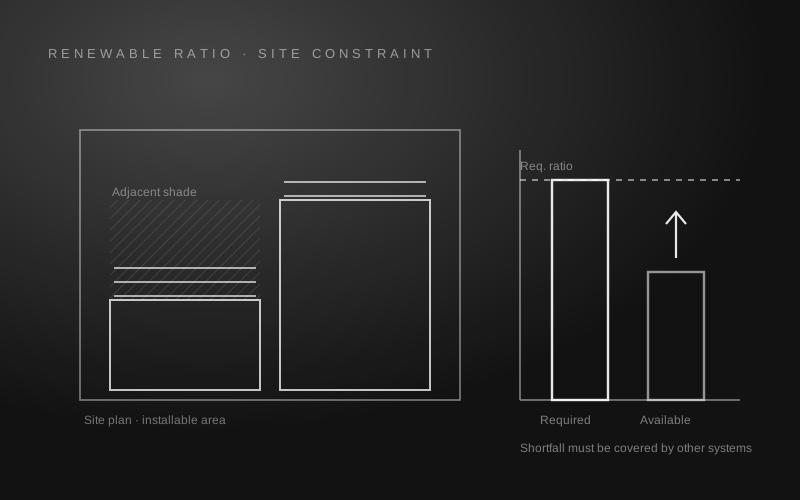
Mandatory Renewable Energy Share: The Real Constraints of Site Conditions
How to find alternatives on urban sites without enough area for solar PV.
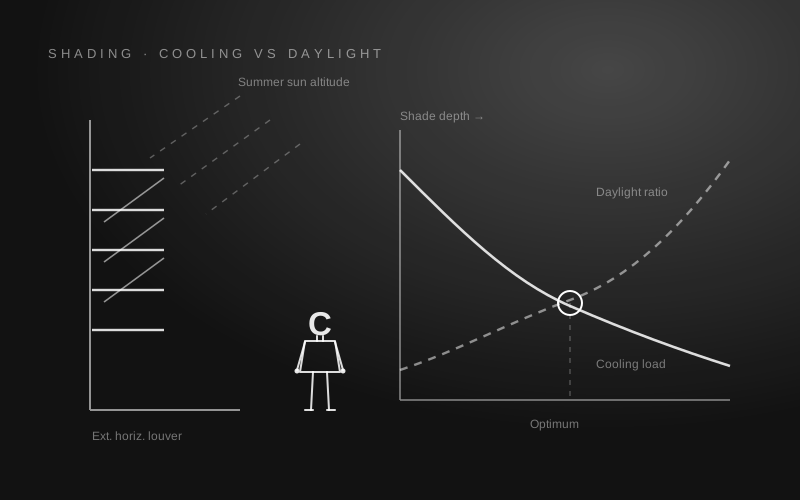
Solar Shading Design: Balancing Cooling Load and Daylighting
Curves showing how energy use and indoor illuminance shift together as external louver angles change.
Related Services
The topics in this category are delivered as real projects by the disciplines below.
Building Environment & Certification
G-SEED certification, energy performance assessment, thermal bridging and condensation, heat island mitigation simulation
Environmental Engineering
EIA, preliminary disaster impact review, stormwater runoff reduction, low impact development (LID)
Engineering Simulation
Thermal and flow analysis, wind corridors and airflow, heat island and thermal environment, daylighting and solar shading analysis
Set your certification target now,
and cut costs.
Tell us your site, use and size, and we’ll outline the applicable certifications and design requirements for each target rating.